
On World Mental Health Day, a pause to reflect upon the stark contrasts between historical and contemporary approaches to mental health unveils a noteworthy journey from darkness to enlightened understanding.
The Days of Lunatic Asylums
A journey into the often grim history of lunatic asylums reveals practices and societal norms starkly divergent from today’s empathetic and science-driven mental health approaches. In the 19th and early 20th centuries, individuals could be admitted to asylums for an array of reasons that were alarmingly non-specific and frequently misaligned with genuine mental health conditions.
For instance, women could be confined for reasons as arbitrary as postpartum depression, labeled as “hysteria,” or for challenging societal norms and exhibiting what was perceived as “rebellious” behaviour. Similarly, men who displayed emotion or failed to conform to the rigid expectations of masculinity of the era might find themselves institutionalised.
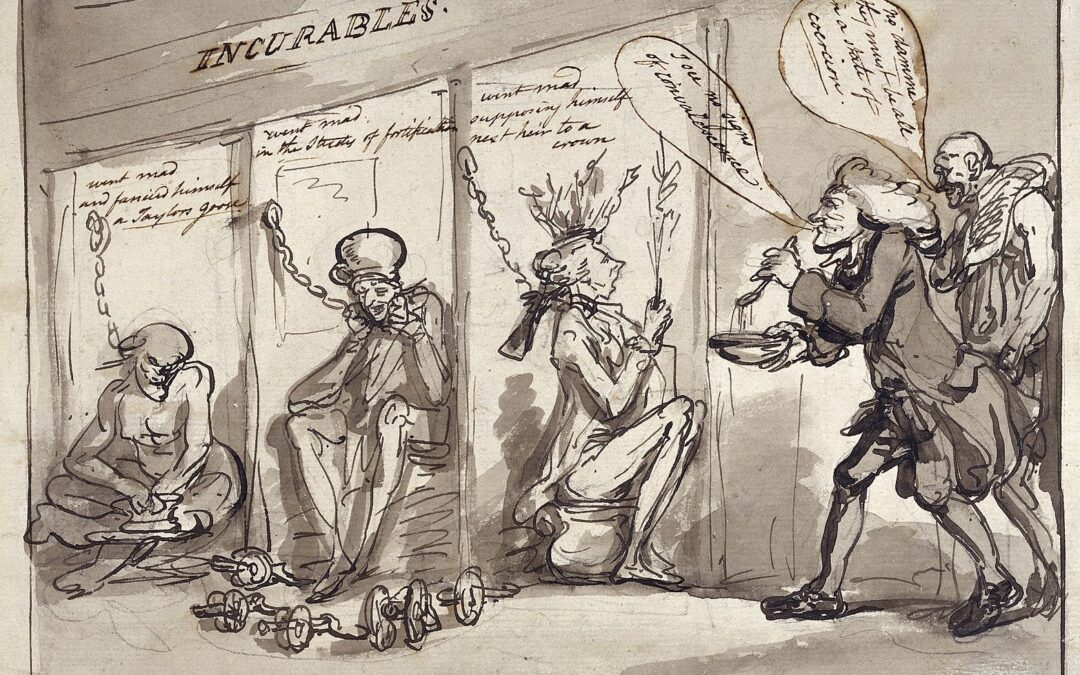
Asylums like like the notorious Bedlam Asylum in London, serve as reminders of a time when mental health was poorly understood and often conflated with moral or character flaws. The patients, often referred to as “inmates,” were subjected to abysmal living conditions and were frequently shackled, left naked, and starved. They suffered not only from a lack of compassionate care but also from abusive practices that were horrifyingly common in asylums during those times. Patients is some institutions were subjected to brutal treatments like rotational therapy (being spun in a chair suspended in the air), cold water immersion therapy, and even lobotomies and electroconvulsive therapy without adequate scientific grounding or consent.
Genealogical Insights through Asylum Records
From a genealogical standpoint, records from historical asylums offer a unique window into the past, bearing poignant stories and providing vital links in tracing familial connections. Researchers delve into historical documents such as admission and discharge records, medical notes, and sometimes, sadly, details of burials from institutions. Digitalised on platforms like Ancestry.com, these records offer pathways to understanding the life stories – often tinged with sadness and struggle – of ancestors who endured institutionalisation.
A Shift Towards Reform
In the embrace of the 21st century, our understanding of mental health has thankfully undergone extensive transformative shifts. As we ponder upon World Mental Health Day, the shadow of lunatic asylums looms as a somber reminder of our past, pushing us to forge ahead towards a future wherein mental health is recognised, de-stigmatised, and enveloped with support and understanding.
Find more Blue Eagle Genealogy blogs here.